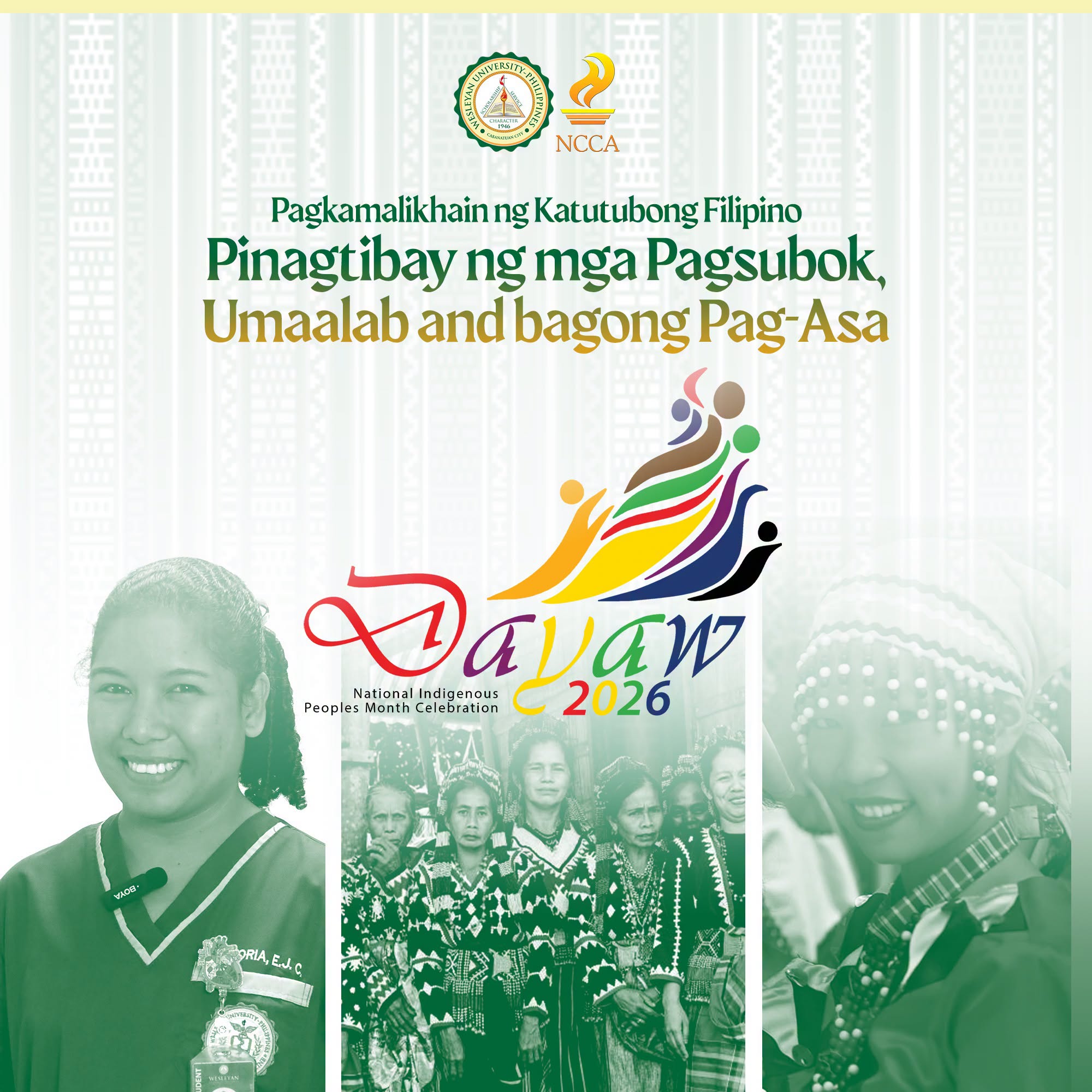
 The National Indigenous Peoples Month celebration is an opportunity to reflect on the importance of preserving traditions and knowledge passed down through generations.The Philippines is home to diverse Indigenous communities whose cultural practices, languages, beliefs, and traditional knowledge contribute to the country’s identity. These traditions represent generations of history and experience that deserve recognition, respect, and protection.
However, cultural preservation requires more than remembering the past. It also means giving younger generations opportunities to understand their heritage and carry it forward while adapting to a changing world.
Education plays an important role in this process. Universities can help promote cultural awareness by encouraging students to learn about different communities, challenge stereotypes, and recognize the value of cultural diversity.
For Indigenous students, an inclusive learning environment provides opportunities to pursue their aspirations while remaining connected to the identities and traditions that shape their lives.
Opening Doors Through Education
Beyond celebrating National Indigenous Peoples Month this October, Wesleyan University-Philippines (WUP) affirms its commitment to welcoming students of every cultural background.
“Sa Wesleyan, kahit sino ka, tanggap ka.”
For Ellaine Joyce Victoria, a member of the Aeta community in Capas, Tarlac, and a third-year Doctor of Medicine student, this message captures the importance of belonging in a university where students come from different cultural backgrounds, carry different traditions, and share the same opportunity to learn and grow.
Victoria chose to pursue medicine at WUP because of its internationally recognized standing, commitment to quality education, scholarship opportunities, and an environment where she believes students are accepted regardless of who they are.
Her experience reflects the importance of an academic community where students are welcomed, respected, and given opportunities to pursue their ambitions without discrimination.
At its heart is the reminder that education should not require students to set aside their cultural identities to belong. Instead, it should provide a space where their backgrounds, traditions, and experiences are recognized as valuable parts of the university community.
Beyond fostering an inclusive campus, access to higher education remains an important consideration for students from Indigenous communities.
WUP’s Cultural Minority Scholarship offers 100 percent tuition fee coverage, subject to applicable requirements and qualifications. The scholarship provides financial assistance to eligible students and supports their pursuit of higher education.
Such opportunities underscore the importance of making education more accessible to students from diverse backgrounds. When financial barriers are reduced and students feel accepted, they are better positioned to participate in university life and work toward their academic goals.
More importantly, supporting Indigenous learners means recognizing their potential not only as students but also as future professionals, community leaders, and advocates who can contribute to their respective communities.
From Education to Meaningful Service
For Victoria, pursuing medicine is more than achieving a professional milestone. It is an opportunity to help address the healthcare needs of her fellow Indigenous Peoples.
“Umaasa po ako na, kapag ako na ’yung naging doktor, maging daan ako sa aking mga kapwa katutubo na mailapit ’yung healthcare na kailangan namin at makaramdam sila na hindi sila kinakadirihan,” she shared.
Her aspiration reflects a desire to make healthcare more accessible to Indigenous communities while ensuring that patients receive care with dignity, compassion, and respect.
Beyond medical treatment, her statement emphasizes the importance of creating healthcare environments where Indigenous Peoples feel safe seeking assistance and are treated without prejudice because of their cultural identity.
By pursuing a medical degree, Victoria hopes to become part of a future in which her fellow Indigenous Peoples can access the healthcare they need without feeling judged or unwelcome.
Her goal also illustrates how education can extend its impact beyond an individual. The knowledge and skills students acquire can become valuable tools for addressing the needs of the communities they understand and hope to serve.
Extending Inclusivity Beyond the Campus
WUP’s commitment to an inclusive community extends beyond welcoming students of different ethnicities and cultural backgrounds into its classrooms. It is also reflected in the University’s efforts to reach communities beyond its campus through extension programs and community outreach.
On October 2, 2026, Christian Education 3 students, together with the Chaplaincy Office and the Wesleyan External Systems, Connections, Opportunities, and Partnerships (WESCOP) Office, conducted an outreach program titled “God’s Endless Love” at Kalinga Gym in Dupinga, Gabaldon, Nueva Ecija, in partnership with NENED UMC. The initiative reached 200 recipients of goods from the community.
The outreach program demonstrated how WUP extends its engagement beyond academic instruction by bringing assistance directly to communities. By participating in initiatives such as this, the University community has opportunities to put compassion, service, and social responsibility into practice.
In the context of National Indigenous Peoples Month, the initiative also supported the broader message of inclusion reflected in Ellaine Joyce Victoria’s experience at WUP. While the University welcomes students from diverse cultural backgrounds, its community engagement efforts provided another avenue for extending care and support beyond the campus.
These efforts reinforced the idea that inclusivity is not limited to accepting people within an institution. It also involves recognizing communities beyond its walls, responding to their needs, and building relationships grounded in respect and service.
Through education and community outreach, WUP continues to demonstrate how a university can contribute to a community where people from different backgrounds are valued and where service reaches beyond the classroom.
Photo references:
https://travelauthenticphilippines.com/indigenous…/
https://philippines.un.org/…/320762-seeing-unseen…
Article by Emily G. Agumbay (PIO)
Poster by John Carlo S. Dauz (PIO)